Breath — power, control, ease
Calm breathing in situations that used to spike it. Sleep that doesn't require breath-management techniques. Conversations where you no longer notice the tightness in your chest, because the tightness isn't there.
What gets trained
Stronger respiratory muscles. A ribcage flexible enough to make every breath easier. Command of the breathing pattern itself. And the one most people feel without trying: a lower resting breath rate. Fewer breaths per minute even when you're not practicing, because each breath now moves more air at less cost — and a slower resting rhythm settles the nervous system on its own.
How it gets trained
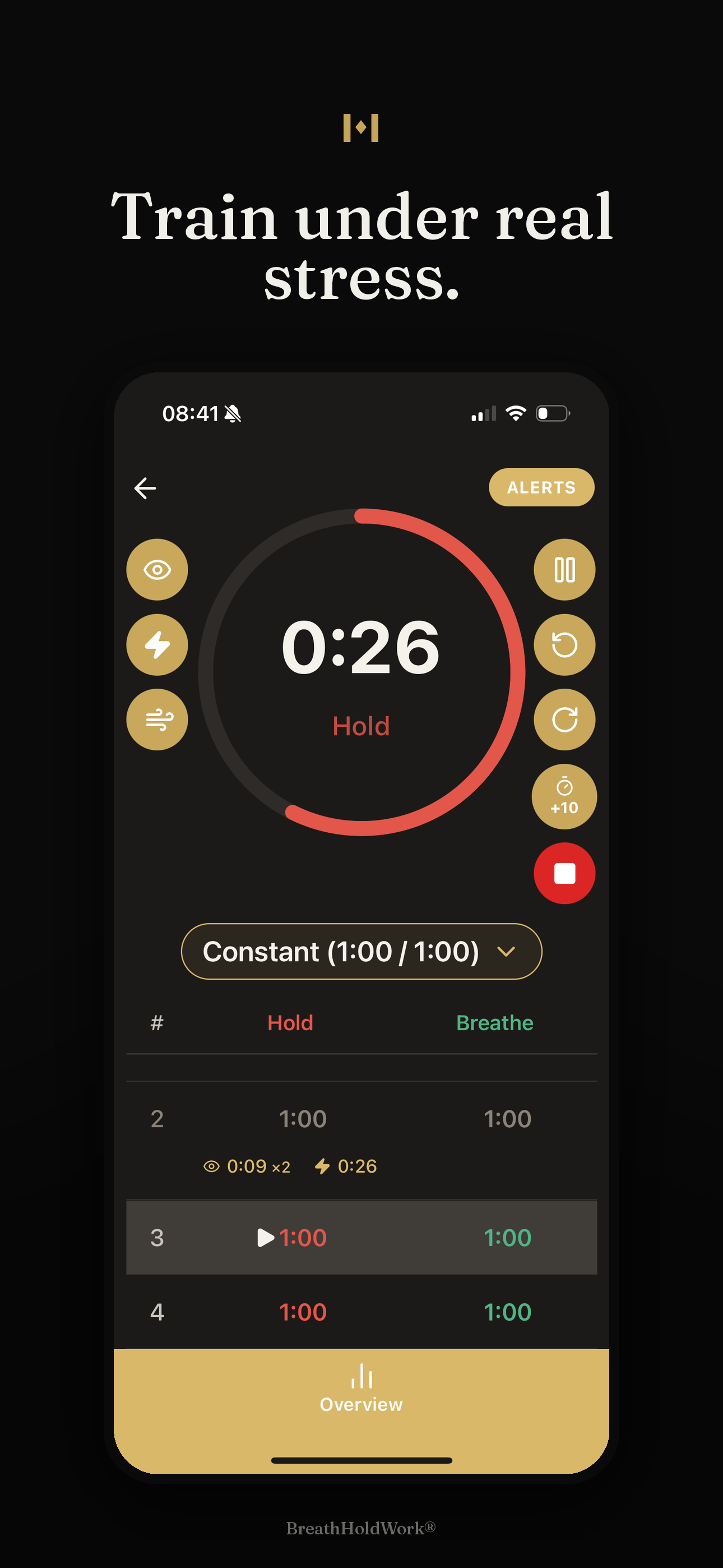
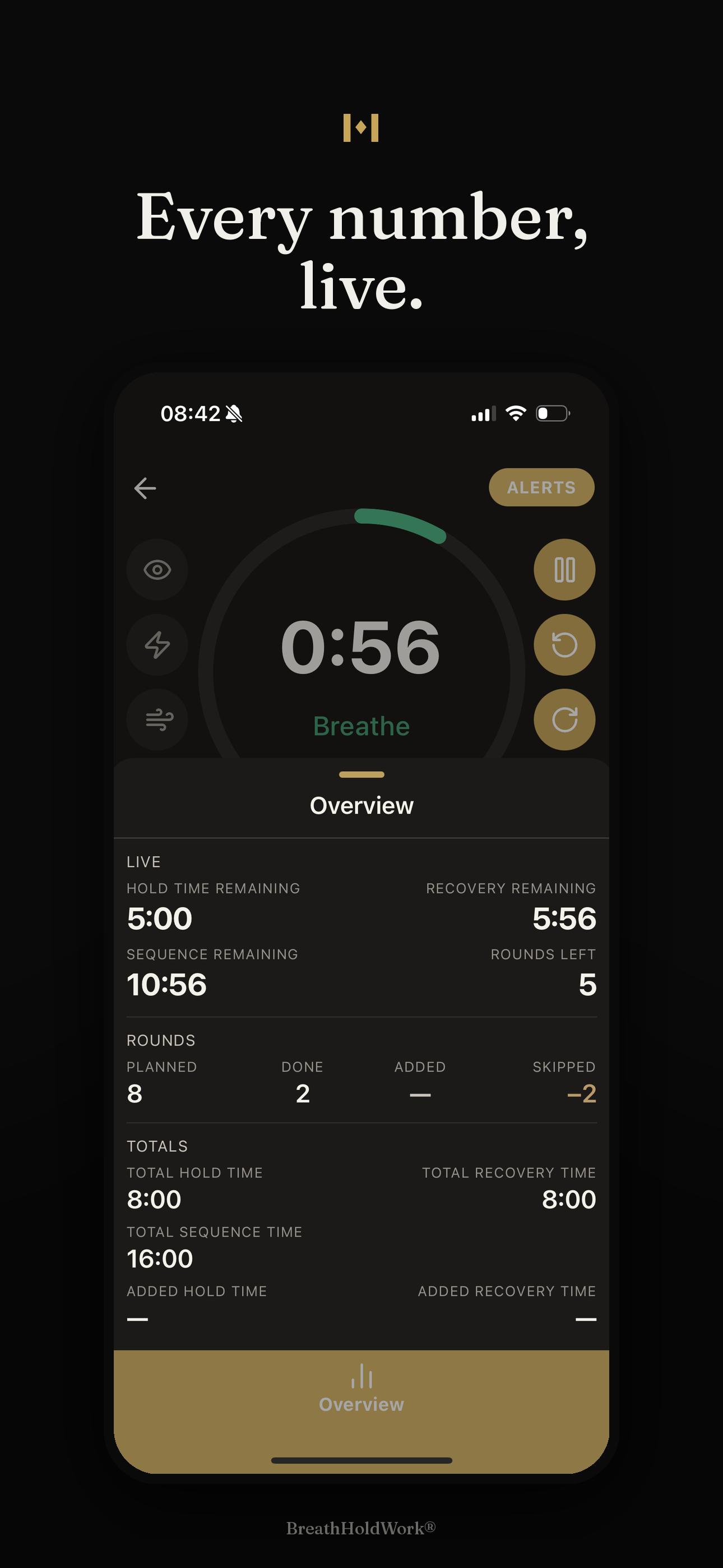
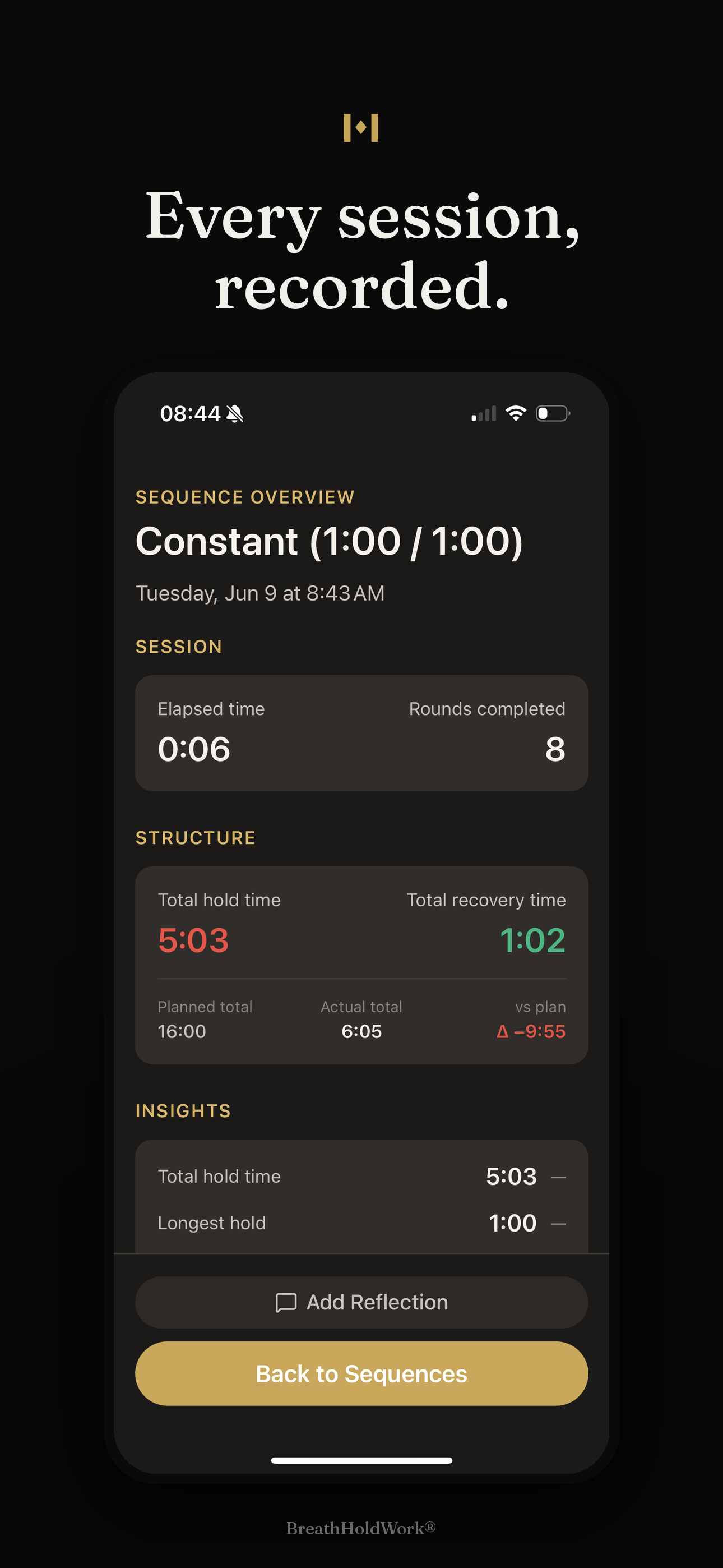
The exercises make each breath better; the holds reduce how many breaths you need. With repetition, that lower breathing rate becomes your everyday baseline. You log every session in the Practice App and watch the progression.